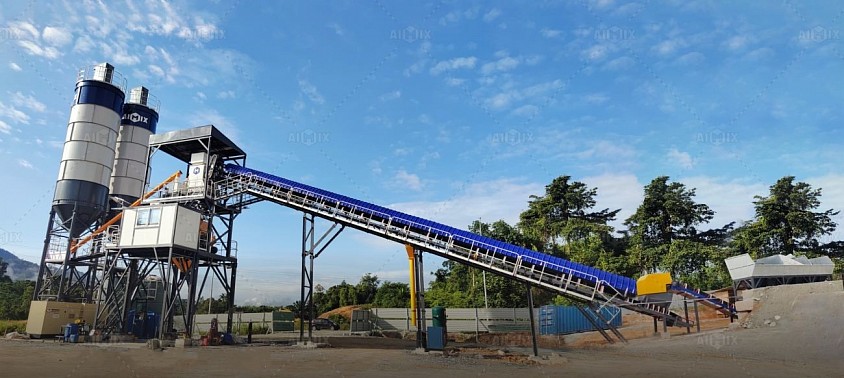
Aimix Batching Concrete Plant
Stationary Concrete Batching Plant: Ensuring High-Quality Concrete Production at Scale
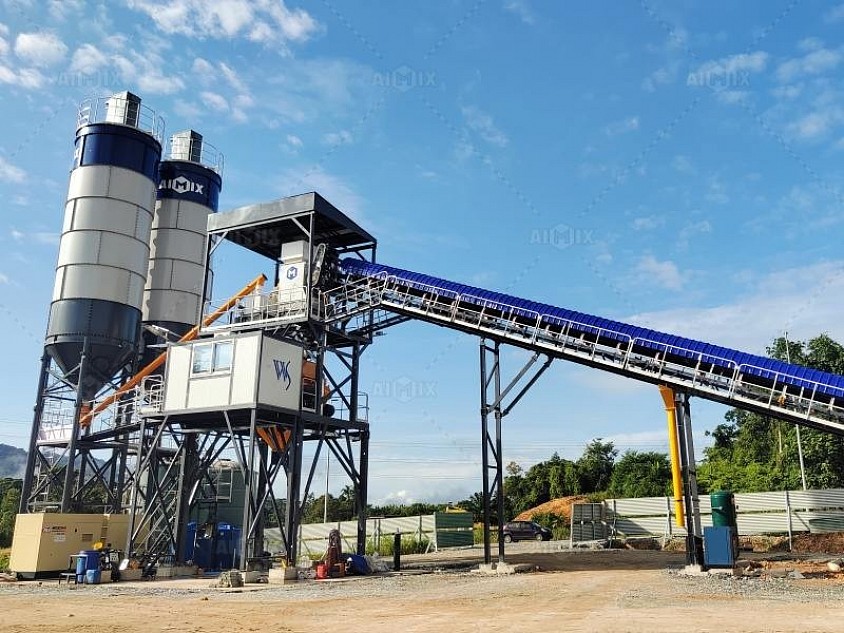
A stationary concrete batching plant plays a crucial role in large-scale construction projects where consistency, durability, and high production capacity are required. Unlike mobile or portable solutions, stationary plants are designed for long-term installation and continuous operation, making them ideal for infrastructure projects such as highways, bridges, dams, airports, and commercial buildings.
In today’s competitive construction industry, the demand for high-performance systems like the commercial concrete batching plant continues to rise. Contractors and ready-mix suppliers increasingly rely on stationary solutions to ensure stable output and strict quality control, especially when supplying concrete for critical structural applications.
This article explains how stationary concrete batching plants ensure high-quality concrete production at scale and why they remain the preferred choice for commercial operations.
High Production Stability for Large-Scale Projects
One of the most important advantages of a stationary concrete batching plant is its ability to deliver stable and continuous production. These plants are designed with fixed foundations and robust structures that allow them to operate efficiently under heavy workloads for extended periods.
Unlike smaller or mobile systems, stationary plants are not limited by relocation constraints. This allows engineers to optimize layout, material flow, and production efficiency without compromising capacity. As a result, the plant can consistently produce large volumes of concrete without interruptions.
For large infrastructure developments, stability is critical. Even minor inconsistencies in supply can delay entire construction schedules. A stationary system ensures that concrete is always available when needed, helping contractors maintain strict project timelines.
Precise Material Batching for Consistent Quality
Concrete quality depends heavily on the accuracy of material proportioning. A stationary concrete batching plant uses advanced weighing systems to ensure that cement, aggregates, water, and additives are measured precisely for every batch.
High-end systems often include electronic weighing sensors and PLC-controlled automation, which eliminate human error and maintain consistent mix ratios. This level of precision is essential for producing concrete that meets engineering standards for strength, durability, and workability.
In a commercial concrete batching plant, where large volumes of concrete are supplied to multiple clients, consistency is even more important. Any variation in quality can affect structural safety and lead to financial losses or project delays.
Advanced Automation and Control Systems
Modern stationary plants are equipped with intelligent control systems that significantly improve production efficiency and product quality. PLC automation allows operators to control the entire batching process through a centralized interface.
From aggregate feeding and weighing to mixing and discharging, every stage is precisely controlled and monitored. This reduces manual intervention and ensures that each batch follows the same production parameters.
In addition, automation systems can store multiple mix designs, making it easy to switch between different concrete grades for various project requirements. This flexibility is especially valuable for commercial concrete batching plant operations that serve multiple construction clients simultaneously.
Efficient Material Handling and Plant Layout Design
The layout of a stationary concrete batching plant is carefully designed to optimize material flow and reduce production delays. Aggregates are typically stored in separate bins, which are then transported via conveyor belts or skip hoists into the mixing system.
Cement is stored in silos, ensuring protection from moisture and maintaining material quality. Water and chemical admixtures are delivered through controlled pipelines to maintain precise dosing.
By minimizing unnecessary material movement and reducing transfer time between stages, stationary plants achieve higher efficiency and lower energy consumption compared to less optimized systems.
High Capacity for Commercial Concrete Supply
A key reason why stationary plants are widely used in commercial operations is their high production capacity. Depending on configuration, these plants can produce anywhere from 60 m³/h to over 240 m³/h of concrete, making them suitable for large-scale supply contracts.
In a commercial concrete batching plant, the ability to meet continuous demand is essential. Ready-mix suppliers often serve multiple construction sites simultaneously, requiring a system that can maintain high output without sacrificing quality.
Stationary plants are specifically designed to handle this demand, making them the backbone of commercial concrete supply businesses in urban and industrial markets.
Quality Control and Compliance with Standards
Quality control is a fundamental requirement in modern construction. Stationary concrete batching plants are equipped with systems that allow continuous monitoring of production parameters, ensuring compliance with industry standards.
Operators can track moisture levels, material ratios, mixing time, and output quality in real time. Many systems also include automatic alarms that alert operators when deviations occur, allowing immediate corrective action.
This ensures that every batch of concrete meets required specifications, reducing the risk of structural failure and improving customer satisfaction in commercial supply operations.
Reduced Operating Costs Through Long-Term Efficiency
Although stationary plants require a higher initial investment compared to mobile systems, they offer lower operating costs in the long run. Their stable structure, optimized workflow, and automated systems reduce labor requirements and material waste.
Energy-efficient motors and optimized mixing processes also contribute to lower power consumption. Additionally, reduced downtime and fewer maintenance interruptions improve overall productivity.
For businesses operating a commercial concrete batching plant, these long-term savings significantly improve profitability and return on investment.
Ideal Applications in Large-Scale Construction
Stationary concrete batching plants are widely used in projects that require continuous and high-quality concrete supply. These include:
High-rise building construction
Highway and expressway development
Bridge and tunnel engineering
Dam and water conservancy projects
Industrial parks and commercial complexes
In all these applications, consistent quality and large production capacity are essential for structural safety and project efficiency.
Conclusion
A stationary concrete batching plant is a critical solution for achieving high-quality concrete production at scale. Through precise batching systems, advanced automation, and efficient material handling, it ensures consistent output that meets the strict requirements of modern construction projects.
For companies operating a commercial concrete batching plant, stationary systems provide the ideal combination of capacity, reliability, and long-term cost efficiency. While the initial investment may be higher, the benefits in productivity, quality control, and operational stability make it a highly profitable choice for large-scale concrete production.
As global infrastructure demand continues to grow, stationary batching plants will remain at the core of high-performance concrete supply systems worldwide.
How Much Does a Concrete Batch Plant Cost for Different Capacity Levels
The question “how much does a concrete batch plant cost” is one of the most important considerations for contractors, investors, and construction companies planning to enter the ready-mix concrete business. However, there is no single fixed price because cost varies significantly based on capacity, configuration, automation level, and regional market conditions. Understanding how capacity influences investment helps buyers choose the right plant for their project scale and long-term profitability.
At the same time, many first-time investors also ask how to start a concrete plant, since purchasing equipment is only one part of building a successful concrete production business. In reality, both cost planning and operational setup must be considered together to ensure sustainable returns.
Small Capacity Plants (25–50 m³/h): Entry-Level Investment
Small concrete batching plants are typically used for rural projects, small housing developments, road repairs, and short-term construction sites. These plants are often more affordable and easier to install, making them popular among first-time buyers or small contractors.
In terms of pricing, small-capacity plants generally have the lowest investment requirement. The how much does a concrete batch plant cost question for this segment usually depends on whether the plant is stationary or mobile. Mobile batching plants tend to cost slightly more due to integrated chassis design and faster relocation capability.
For investors learning how to start a concrete plant, this category is often the recommended entry point. It requires less land, simpler installation, and lower operational complexity. However, production capacity is limited, so it is best suited for businesses with smaller or more localized demand.
Medium Capacity Plants (60–120 m³/h): Balanced Cost and Productivity
Medium-capacity batching plants represent the most common choice in global markets. They are widely used in urban construction, commercial projects, and infrastructure development such as bridges, highways, and industrial parks.
At this level, how much does a concrete batch plant cost becomes more dependent on configuration choices such as belt feeding systems, twin-shaft mixers, cement silo capacity, and automation systems. Buyers often choose between semi-automatic and fully automatic PLC-controlled systems to balance cost and efficiency.
From a business perspective, understanding how to start a concrete plant at this level requires more detailed planning. Site selection, raw material supply chains, logistics, and skilled operator training become important factors. Although the initial investment is higher than small plants, medium-capacity systems offer much stronger production stability and return on investment.
Large Capacity Plants (120–240 m³/h): High Investment, High Output
Large batching plants are designed for major infrastructure projects, including airports, highways, dams, and large-scale real estate developments. These systems are built for continuous, high-volume production and typically feature advanced automation, multiple cement silos, and high-efficiency mixing systems.
At this level, the answer to how much does a concrete batch plant cost increases significantly due to engineering complexity and system integration. Costs are heavily influenced by customization, environmental compliance systems, and digital monitoring technology.
For companies exploring how to start a concrete plant at this scale, the requirements are much more complex. Strong capital investment, experienced technical teams, and long-term project contracts are usually necessary. However, the profit potential is also much higher due to continuous production demand and large project contracts.
Key Factors That Influence Cost Across All Capacities
While capacity is the primary cost driver, several additional factors affect the final price of a concrete batching plant:
First, the level of automation plays a major role. Fully automated plants with smart control systems, remote monitoring, and data analytics tools cost more but significantly reduce labor dependency and operational errors.
Second, the type of feeding system (hopper vs belt) also impacts cost. Belt-type systems generally offer higher efficiency but require greater initial investment.
Third, regional factors such as shipping costs, import taxes, and installation conditions can significantly change total investment. For example, island and remote markets often experience higher total project costs.
Finally, after-sales service, spare parts availability, and technical support must also be considered when evaluating how much does a concrete batch plant cost, since long-term maintenance has a direct impact on lifecycle cost.
How to Start a Concrete Plant Successfully
Understanding how to start a concrete plant goes beyond equipment selection. A successful setup typically includes several key steps:
The first step is market research. Investors must understand local demand, competitors, pricing structures, and infrastructure development trends. Without stable demand, even the best equipment cannot guarantee profitability.
The second step is choosing the right capacity and configuration. This decision should be based on project scale, budget, and long-term expansion plans. Many successful operators start with medium-capacity plants and expand as demand grows.
The third step is securing raw material supply chains. Reliable access to cement, aggregates, and water is essential for stable production.
The fourth step is installation and commissioning. Proper setup ensures accurate batching, stable operation, and long-term equipment performance.
Finally, operational management, including maintenance planning and operator training, determines long-term success. Even if the initial investment is higher, efficient management can significantly reduce operating costs over time.
Conclusion
In conclusion, how much does a concrete batch plant cost depends heavily on capacity levels, ranging from affordable small plants to high-investment large-scale systems. Small plants offer low entry barriers, medium plants provide balanced performance and profitability, and large plants deliver maximum output for major infrastructure projects.
At the same time, understanding how to start a concrete plant is equally important, as successful operation depends not only on equipment investment but also on planning, logistics, management, and long-term strategy. Buyers who evaluate both cost structure and business setup requirements are far more likely to achieve stable growth and strong return on investment in the concrete production industry.
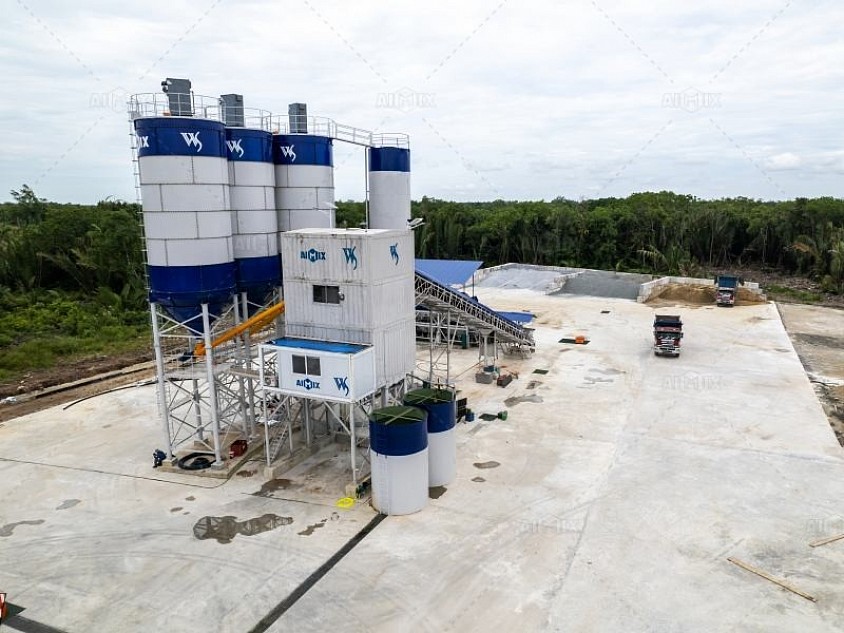
Mobile Ready Mix Concrete Plant for High-Demand Construction Projects: Ensuring Continuous Concrete Supply
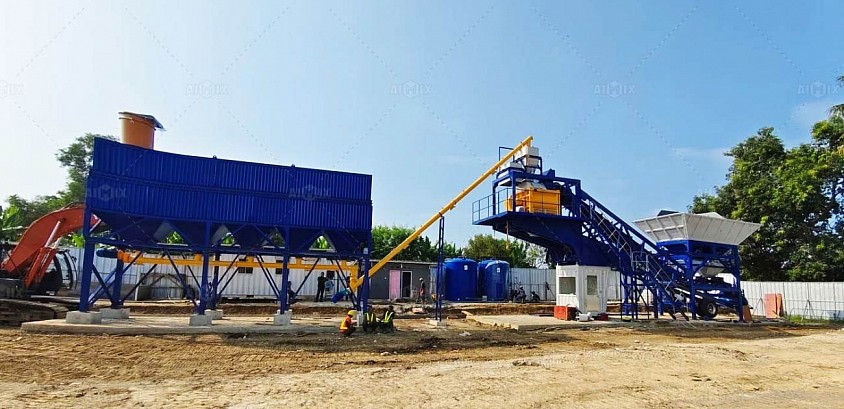
High-demand construction projects such as highways, airports, bridges, industrial zones, and large urban developments require a stable and uninterrupted supply of concrete. Any delay in concrete delivery can directly impact project timelines, labor efficiency, and overall cost performance. In this context, a mobile ready mix concrete plant has become an increasingly popular solution because of its flexibility, rapid deployment, and ability to ensure continuous production close to the construction site.
Role of Mobile Ready Mix Concrete Plant in High-Demand Projects
A mobile ready mix concrete plant is designed to be easily transported, quickly installed, and efficiently operated at or near construction sites. Unlike stationary plants that require permanent foundations and longer installation time, mobile plants are mounted on trailers or modular chassis, allowing fast relocation and setup.
In high-demand construction environments, speed and continuity are critical. Projects such as expressways or large commercial complexes often require thousands of cubic meters of concrete per day. A mobile plant reduces dependency on external suppliers and minimizes transportation delays caused by traffic congestion or long-distance hauling.
Another advantage is on-site production. By producing concrete directly at the project location, contractors can better control quality, reduce material waste, and adjust mix designs in real time based on engineering requirements.
Ensuring Continuous Concrete Supply in Large Projects
Continuous concrete supply is one of the biggest challenges in large-scale construction. Interruptions can lead to cold joints, structural weaknesses, and rework costs. A mobile batching plant addresses this issue by maintaining production close to the point of use.
To ensure uninterrupted operation, modern mobile plants are equipped with automated control systems, continuous feeding mechanisms, and optimized mixing cycles. These technologies allow operators to maintain consistent output even under high demand conditions.
Additionally, mobile plants can be configured with multiple cement silos and aggregate bins to support long working hours without frequent material replenishment. This is particularly important in remote or congested areas where supply chain delays are common.
In large infrastructure projects, contractors often deploy more than one mobile plant to create a distributed production network. This strategy increases redundancy and ensures that even if one unit requires maintenance, production can continue without significant downtime.
Advantages of Mobile Plant Deployment for High-Demand Construction
One of the key benefits of a mobile ready mix concrete plant is its ability to adapt to changing project conditions. Construction projects often evolve in phases, and mobile plants can be relocated to follow the progress of work. This reduces transportation distance and improves logistics efficiency.
Another advantage is cost control. While stationary plants require significant civil engineering work and long-term investment, mobile plants reduce foundation costs and shorten installation timelines. This makes them ideal for projects with strict deadlines or temporary site requirements.
Environmental performance is also a growing consideration. By producing concrete closer to the construction site, mobile plants reduce truck mileage, fuel consumption, and carbon emissions. This aligns with global sustainability goals and helps contractors meet environmental regulations.
Operational flexibility is another important factor. Mobile plants can easily adjust production capacity based on project demand. Whether the requirement is 30 m³/h for medium projects or 90 m³/h for large-scale infrastructure, configurations can be customized accordingly.
Role of Ready Mix Concrete Plant Suppliers in Project Success
Choosing reliable ready mix concrete plant suppliers is a critical factor in ensuring long-term success for high-demand construction projects. Suppliers are not only responsible for delivering equipment but also for providing technical support, installation guidance, spare parts, and after-sales service.
Experienced suppliers help contractors select the right plant model based on project size, site conditions, and production requirements. For example, in highway construction, suppliers may recommend high-capacity mobile plants with belt feeding systems for faster batching speed. In contrast, urban projects may require compact designs with noise and dust control features.
In addition, professional ready mix concrete plant suppliers often provide customization options such as automatic control systems, IoT monitoring, and upgraded mixing technology. These enhancements improve productivity and reduce operational risks during long-term use.
After-sales support is equally important. Since high-demand construction projects operate under tight schedules, any equipment failure can lead to costly delays. Reliable suppliers ensure fast response times, availability of spare parts, and technical training for on-site operators.
Operational Strategies for Continuous Performance
To maintain continuous concrete supply, contractors must adopt effective operational strategies in addition to choosing the right equipment. Proper planning of material logistics, such as cement delivery schedules and aggregate stock management, is essential.
Preventive maintenance also plays a key role. Regular inspection of mixers, conveyors, and control systems helps avoid unexpected breakdowns. Many modern mobile plants include remote monitoring systems that allow suppliers and operators to track performance in real time.
Another strategy is workforce training. Skilled operators can significantly improve batching efficiency and reduce errors. In high-demand environments, even small improvements in cycle time can result in substantial productivity gains over the course of a project.
Energy efficiency should also be considered. Optimized power usage reduces operational costs, especially in remote sites where electricity supply may rely on generators.
Conclusion
In conclusion, a mobile ready mix concrete plant is an essential solution for high-demand construction projects that require speed, flexibility, and continuous concrete supply. By enabling on-site production, reducing transportation delays, and improving operational efficiency, it helps contractors meet strict project deadlines and quality standards.
At the same time, selecting reliable ready mix concrete plant suppliers plays a crucial role in ensuring equipment performance, technical support, and long-term operational success. When properly configured and managed, mobile batching plants become a powerful asset for modern construction projects, delivering both economic and operational advantages in demanding environments.
How to Reduce Investment Risk When Buying Mobile Concrete Batching Plant for Sale
Investing in a mobile concrete batching plant for sale is a strategic decision for contractors who need flexibility, fast installation, and multi-site operation capability. However, like any industrial equipment investment, it carries financial and operational risks. These risks can include poor equipment selection, unexpected maintenance costs, low production efficiency, and supplier reliability issues. Understanding how to minimize these risks is essential for ensuring long-term profitability. In mature markets such as the mobile batching plant for sale Australia sector, contractors increasingly focus on lifecycle value rather than just initial purchase price.
Choose the Right Plant Capacity Based on Real Demand
One of the most common investment mistakes is selecting a plant capacity that does not match actual project demand. Oversized plants lead to unnecessary capital expenditure and higher operating costs, while undersized plants limit production and reduce revenue potential.
Before purchasing a mobile batching plant, investors should evaluate project scale, concrete consumption rates, and expected contract duration. A properly matched capacity ensures stable utilization rates and faster return on investment.
In markets like mobile batching plant for sale Australia, where construction projects range from remote infrastructure to urban development, selecting the correct capacity is especially important due to varying site conditions and logistics requirements.
Evaluate Supplier Reputation and Manufacturing Quality
Supplier reliability plays a major role in reducing investment risk. Not all manufacturers offer the same level of engineering quality, after-sales service, or spare parts availability. Choosing a reputable manufacturer reduces the likelihood of equipment failure and ensures long-term operational stability.
Buyers should assess supplier experience, global project references, certifications, and customer feedback before making a decision. Established manufacturers typically provide better technical support, installation guidance, and training services.
For buyers considering a mobile concrete batching plant for sale, especially in international markets like Australia, supplier support is critical due to the distance between manufacturer and project site. Reliable after-sales service can significantly reduce downtime and maintenance risks.
Prioritize Equipment Quality Over Low Price
While price is an important factor, choosing the cheapest option often increases long-term financial risk. Low-cost equipment may lack durability, use inferior components, or require frequent maintenance.
High-quality mobile batching plants usually include better mixing systems, stronger structural design, and advanced automation controls. These features improve production efficiency and reduce breakdown frequency.
In the mobile batching plant for sale Australia market, contractors often prefer mid-to-high-end configurations because labor and downtime costs are high. Investing in quality equipment reduces unexpected expenses and improves long-term ROI.
Assess Mobility and Site Adaptability
The main advantage of a mobile plant is its ability to relocate quickly between construction sites. However, not all models offer the same level of mobility efficiency. Some require complex disassembly, while others are designed for rapid deployment.
Investors should evaluate how quickly the plant can be installed, dismantled, and transported. Faster relocation reduces idle time and increases equipment utilization rate, directly improving profitability.
For contractors working on remote or geographically dispersed projects in Australia, mobility is a key factor in selecting a mobile concrete batching plant for sale, as transportation distances and site accessibility can significantly affect operational efficiency.
Analyze Total Cost of Ownership Instead of Purchase Price
Many investors focus only on the initial purchase price, ignoring long-term operational costs. However, the total cost of ownership includes installation, maintenance, fuel or electricity consumption, spare parts, and labor expenses.
A slightly more expensive plant may offer better energy efficiency, lower maintenance needs, and longer service life, ultimately reducing total lifecycle costs.
In the mobile batching plant for sale Australia sector, where fuel, labor, and logistics costs are relatively high, optimizing long-term operational expenses is more important than minimizing upfront investment.
Ensure Strong Automation and Control Systems
Automation plays a significant role in reducing operational risk. Modern mobile batching plants equipped with PLC control systems, real-time monitoring, and automatic batching functions reduce human error and improve production consistency.
Advanced systems also provide data tracking and diagnostics, allowing operators to identify potential issues early and prevent breakdowns.
For international projects, including those involving a mobile concrete batching plant for sale, automation ensures consistent concrete quality even when operated by different teams across multiple sites.
Consider Spare Parts Availability and Maintenance Support
One of the biggest hidden risks in equipment investment is the availability of spare parts. Delays in obtaining replacement components can lead to long downtime and project delays.
Before purchasing, investors should confirm whether the supplier offers local or regional spare parts support. Maintenance training and technical documentation are also important for reducing long-term operational risks.
In Australia, where construction projects often operate under strict timelines, having reliable spare parts support is essential for any mobile batching plant for sale Australia investment.
Conduct Site and Environmental Evaluation
Site conditions can significantly influence plant performance and risk level. Factors such as temperature, humidity, terrain, and power availability must be considered before installation.
Mobile plants operating in harsh environments may require additional protective features such as dust control systems, reinforced structures, or climate-resistant components.
Proper site evaluation reduces the risk of unexpected installation challenges and ensures smoother operation from the beginning of the project.
Conclusion
Reducing investment risk when purchasing a mobile concrete batching plant for sale requires careful planning, technical evaluation, and long-term cost analysis. Key strategies include selecting the right capacity, choosing reputable suppliers, prioritizing quality over price, and evaluating total ownership costs. In competitive markets such as the mobile batching plant for sale Australia industry, successful investors focus on operational efficiency, automation, and reliable after-sales support rather than just initial investment. By taking a comprehensive approach, contractors can significantly reduce risk and achieve stable, long-term profitability in the ready-mix concrete business.
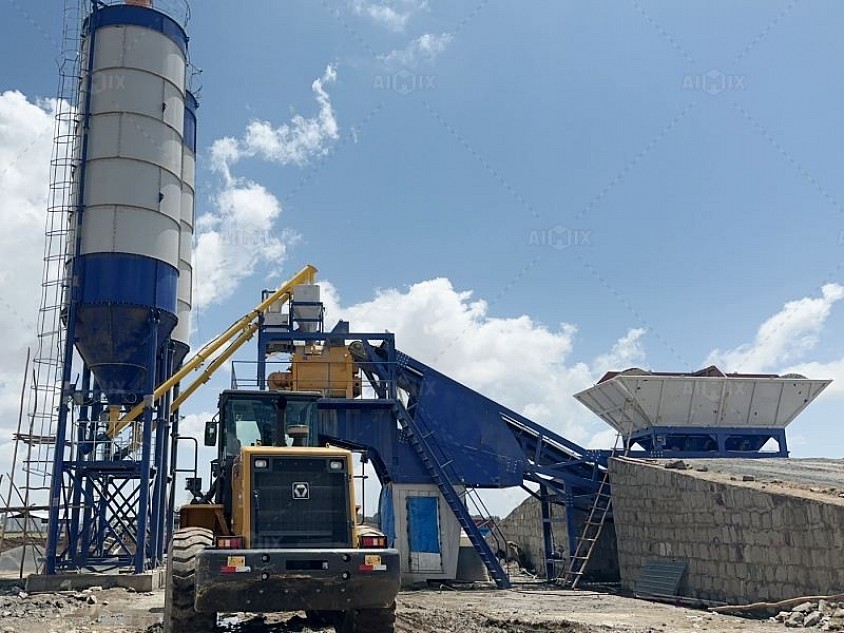
Ready Mix Concrete Plant Cost Trends and Market Insights for Expanding Concrete Businesses
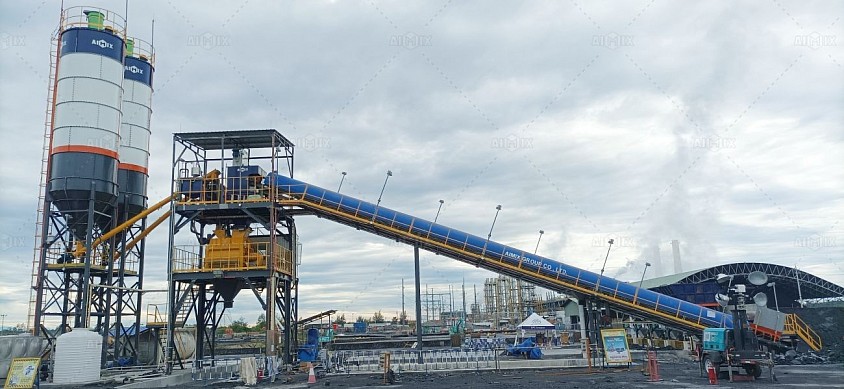
The ready mix concrete plant cost is one of the most important considerations for companies planning to enter or expand in the concrete production industry. While the initial investment can vary significantly depending on capacity and configuration, understanding market trends and long-term operating expenses helps businesses make informed decisions and maximize profitability.
Factors That Influence Ready Mix Concrete Plant Cost
The cost of a ready mix concrete plant depends on multiple factors, including production capacity, mixing technology, automation level, and storage systems. Smaller plants designed for local projects generally require a lower investment, while large commercial facilities with high-output mixers, multiple aggregate bins, and advanced control systems involve higher capital costs.
Another major factor is the selection of supporting equipment. Cement silos, screw conveyors, dust collectors, batching systems, and material handling equipment all contribute to the final price. Customized layouts, environmental protection features, and remote monitoring functions may also increase the initial investment but often improve operational efficiency and reduce maintenance costs over time.
In addition, transportation, foundation construction, installation, and operator training should be included when estimating the total project budget. Businesses that evaluate the complete ownership cost instead of only the purchase price are more likely to achieve sustainable returns.
Market Trends Driving Investment in Ready Mix Concrete Plants
Global urbanization and infrastructure development continue to increase demand for commercial concrete production. Governments and private developers are investing in highways, residential complexes, industrial facilities, and public infrastructure, creating strong demand for reliable batching equipment.
At the same time, automation technologies are reshaping the industry. Modern ready mix concrete plants feature intelligent PLC controls, precise weighing systems, and real-time production monitoring, helping operators reduce material waste while maintaining consistent concrete quality.
Environmental regulations are also influencing purchasing decisions. Energy-efficient motors, dust collection systems, and water recycling technologies are becoming increasingly common as producers seek to lower operating costs and comply with local sustainability requirements.
Ready Mix Concrete Plant in Bangladesh: Growing Opportunities
The market for a ready mix concrete plant in Bangladesh has expanded rapidly due to ongoing urban development, commercial construction, and government infrastructure projects. Major cities continue to experience strong demand for high-quality concrete, encouraging contractors and investors to establish modern batching facilities.
Many companies in Bangladesh are shifting from traditional on-site mixing to centralized ready mix production because it improves quality consistency, reduces labor requirements, and accelerates project completion. This transition supports the adoption of automated batching plants capable of meeting higher production standards.
For investors considering a ready mix concrete plant in Bangladesh, careful planning is essential. Evaluating local raw material availability, transportation logistics, electricity supply, and future market demand can significantly improve the return on investment and ensure stable long-term operations.
Strategies to Control Costs While Expanding Production
Businesses can optimize ready mix concrete plant cost by selecting equipment that matches actual production requirements instead of purchasing excessive capacity. Modular expansion options allow companies to increase output gradually as customer demand grows.
Regular preventive maintenance also plays an important role in controlling expenses. Proper servicing of mixers, conveyors, weighing systems, and electrical components minimizes unexpected downtime and extends equipment lifespan, reducing repair costs over the long term.
Another effective strategy is investing in automation. Although intelligent control systems may require higher upfront spending, they often reduce labor costs, improve batching accuracy, and decrease material waste, leading to better overall profitability.
Choosing the Right Plant for Long-Term Value
Selecting the appropriate plant involves balancing purchase cost with production goals. Small and medium contractors may benefit from compact or mobile solutions that offer flexibility and lower installation expenses, while large ready mix suppliers often require stationary plants capable of continuous high-volume production.
Businesses should also consider future expansion plans when choosing equipment. Plants designed with scalable storage capacity, additional cement silos, and upgradeable control systems provide greater flexibility as demand increases without requiring complete replacement.
Working with experienced equipment manufacturers that offer installation guidance, operator training, spare parts support, and technical service can further protect the investment and improve plant reliability throughout its operational life.
As construction activity continues to grow worldwide, understanding ready mix concrete plant cost trends enables businesses to make smarter investment decisions and remain competitive. By evaluating equipment specifications, lifecycle expenses, and regional opportunities such as the expanding market for a ready mix concrete plant in Bangladesh, companies can build efficient production systems that support sustainable growth and long-term profitability.
Concrete Batching Plant Prices vs Equipment Features: Is Automation Worth the Extra Cost
When comparing concrete batching plant prices, many buyers notice a significant price difference between basic models and fully automated systems. While manual or semi-automatic plants often require a lower initial investment, automated batching plants include advanced control technologies that can improve production efficiency, reduce labor requirements, and deliver more consistent concrete quality. The key question for contractors and investors is whether these additional features justify the higher purchase price and generate long-term value.
How Automation Influences Concrete Batching Plant Prices
Automation adds value by integrating PLC control systems, digital weighing modules, touchscreen interfaces, and intelligent monitoring software into the batching process. These components increase manufacturing costs but also simplify plant operation and improve production accuracy.
As buyers research concrete batching plant prices, they should understand that automation is only one factor affecting the total investment. Plant capacity, mixer type, aggregate storage systems, conveyor configuration, environmental protection equipment, and customization options also contribute to the final quotation.
Productivity Benefits of Automated Systems
One of the biggest advantages of automation is faster and more consistent production. Automated batching systems accurately measure cement, aggregates, water, and additives according to preset formulas, minimizing human error and ensuring uniform concrete quality across every batch.
The improved efficiency becomes especially valuable for commercial ready-mix suppliers and infrastructure contractors handling continuous orders. Reduced cycle times allow more concrete to be produced within the same operating period, increasing equipment utilization and supporting higher project profitability.
Labor Savings and Operational Efficiency
Traditional batching plants often require multiple operators to monitor weighing, material feeding, and mixing activities. Automated systems centralize these functions through intelligent control software, allowing fewer personnel to supervise daily operations.
Lower labor requirements can produce meaningful cost savings over the lifespan of the equipment. In regions where skilled operators are difficult to recruit or labor costs continue rising, automation may offset its higher purchase price through reduced staffing expenses and simplified management.
Better Quality Control and Reduced Material Waste
Concrete quality depends heavily on accurate batching. Small measurement errors can affect compressive strength, workability, and consistency, potentially leading to rejected batches or costly project delays.
Automated weighing systems maintain precise proportions for every production cycle, reducing unnecessary material waste and improving product reliability. The resulting savings in cement and additives may accumulate significantly over years of operation, particularly for high-volume producers.
Smart Monitoring and Maintenance Advantages
Modern automated plants frequently include remote monitoring capabilities that display production statistics, equipment status, and maintenance alerts in real time. Operators can identify abnormal conditions early and schedule preventive maintenance before failures interrupt production.
Digital recordkeeping also simplifies production management by storing historical batch data and maintenance logs. These features help companies optimize resource planning while improving equipment reliability and reducing unexpected downtime.
Regional Considerations: Harga Batching Plant Indonesia
For buyers researching harga batching plant Indonesia, automation should be evaluated alongside local operating conditions and business objectives. Indonesia's expanding infrastructure, industrial development, and commercial construction sectors continue to create demand for efficient concrete production equipment.
Although an automated plant may involve a larger upfront investment than a basic configuration, companies operating in high-output environments may recover the additional cost through improved productivity, lower labor requirements, reduced material waste, and better scheduling efficiency. Businesses comparing harga batching plant Indonesia should therefore consider total lifecycle value instead of focusing exclusively on purchase price.
Is Automation Worth the Extra Cost?
The answer depends largely on production scale and long-term business strategy. Small contractors producing limited volumes for occasional projects may find that a semi-automatic batching plant adequately meets their operational needs while minimizing capital expenditure.
However, companies supplying ready-mix concrete, supporting multiple construction sites, or managing large infrastructure projects often benefit substantially from advanced automation. Greater production consistency, lower operating costs, improved quality control, and enhanced management capabilities can generate returns that exceed the initial premium paid for intelligent equipment.
Ultimately, evaluating concrete batching plant prices requires balancing upfront investment against lifetime operating performance. Rather than choosing the least expensive option, buyers should assess how automation aligns with production targets, workforce availability, maintenance planning, and future expansion goals. In many cases, investing in modern automated technology can strengthen competitiveness and deliver lasting economic advantages throughout the plant's service life.
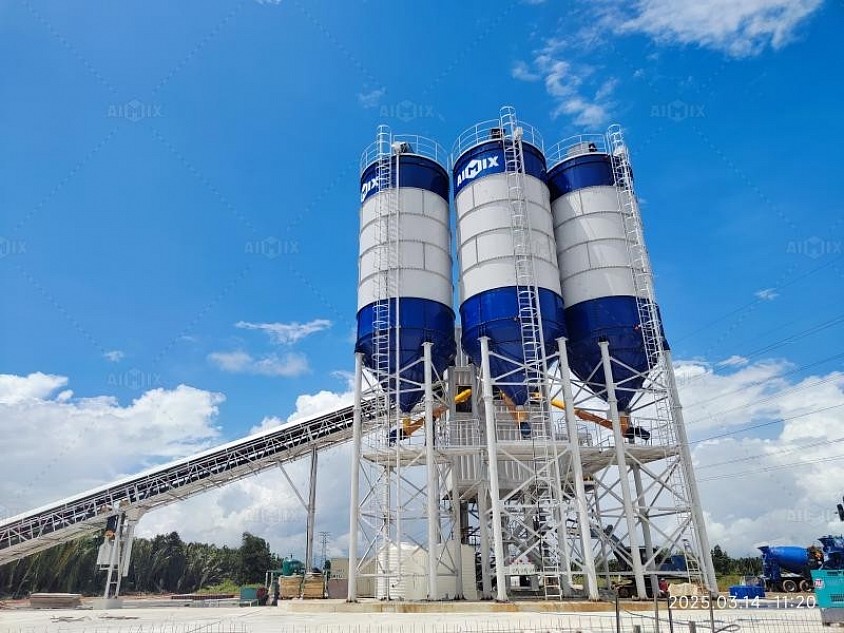
How Stationary Concrete Batch Plants Improve Large Infrastructure Projects
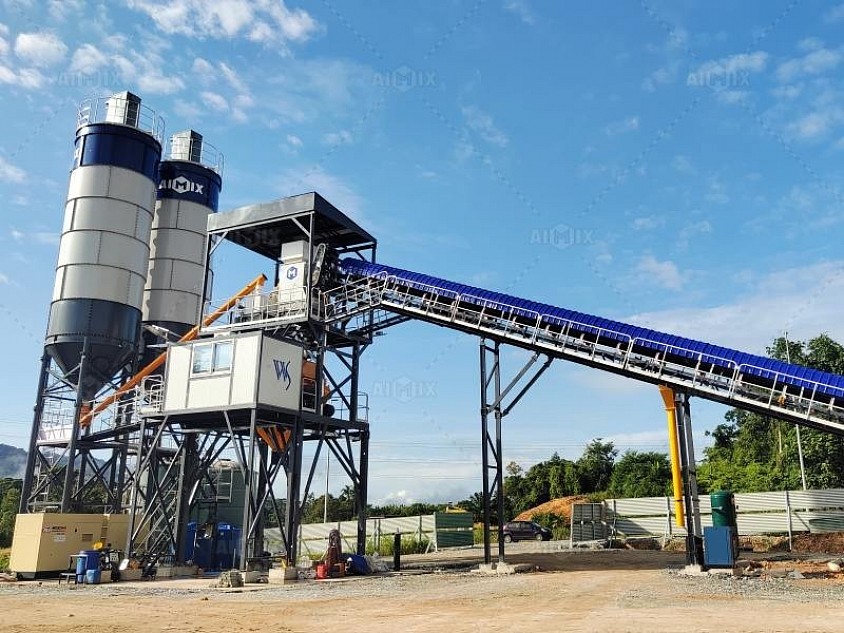
Large infrastructure projects such as highways, bridges, airports, ports, and industrial zones require a continuous, stable, and high-volume supply of concrete. In these projects, production consistency and delivery reliability are critical to meeting strict engineering standards and tight construction schedules. This is where stationary concrete batch plants play a decisive role in improving overall project efficiency and quality control. Compared with smaller or mobile systems, stationary setups are designed for long-term, high-capacity production, making them the backbone of major construction supply chains. In many projects, they operate alongside or as part of a ready mix concrete batch plant system to ensure uninterrupted concrete delivery.
High Production Capacity for Continuous Supply
One of the biggest advantages of stationary plants is their ability to deliver large volumes of concrete consistently over long periods. Infrastructure projects often require thousands of cubic meters of concrete daily, especially during foundation works, road paving, or structural construction phases.
A ready mix concrete batch plant in stationary configuration is specifically engineered for this level of demand. It can operate continuously with minimal interruption, ensuring that construction teams never face material shortages. This steady supply is essential for large pours, where stopping midway can compromise structural integrity and lead to costly rework.
Because stationary plants are fixed installations, they can be equipped with larger silos, more powerful mixers, and higher-capacity conveyors, all of which contribute to sustained production efficiency.
Superior Quality Control and Consistency
Quality consistency is a major requirement in infrastructure development. Even small variations in concrete mix can affect durability, load-bearing capacity, and long-term performance of structures.
Stationary concrete batch plants provide advanced control systems that ensure precise measurement of cement, aggregates, water, and additives. This level of accuracy is difficult to achieve in smaller or less stable setups.
A ready mix concrete batch plant with stationary design typically uses automated PLC control systems, which monitor and adjust every batching cycle in real time. This reduces human error and ensures uniform concrete quality across thousands of batches.
In large infrastructure projects such as those in Dubai, where engineering standards are extremely strict, this consistency is essential for compliance and safety.
Reduced Downtime and Higher Operational Stability
Infrastructure projects are highly time-sensitive, and any interruption in concrete supply can lead to major delays. Stationary plants are designed for stability, meaning they are less affected by relocation issues or frequent setup adjustments.
Because they are permanently installed, a ready mix concrete batch plant in stationary form can be optimized for long-term operation. This includes stable power supply connections, optimized material storage systems, and dedicated maintenance infrastructure.
As a result, downtime is significantly reduced compared to mobile alternatives. This stability allows contractors to maintain continuous production schedules, even during peak demand periods.
Efficient Material Handling and Storage Systems
Another key advantage of stationary plants is their efficient material handling system. Large infrastructure projects require significant quantities of aggregates, cement, and additives, and managing these materials efficiently is essential for cost control.
Stationary plants typically feature large aggregate bins, high-capacity cement silos, and automated conveyor systems. These components ensure smooth material flow and reduce manual handling errors.
A ready mix concrete batch plant with a well-designed stationary layout minimizes material waste and ensures accurate dosing, which directly improves both cost efficiency and concrete quality.
Better Integration with Project Logistics
Large construction projects often involve complex logistics, including multiple subcontractors, delivery schedules, and site coordination. Stationary plants are typically located near or within major project zones, allowing them to serve as centralized production hubs.
This setup reduces transportation distance and ensures faster delivery of ready-mix concrete to different sections of the project. In major urban developments in regions such as Singapore, this logistical efficiency is particularly important due to space constraints and high traffic density.
A ready mix concrete batch plant operating in a stationary configuration allows contractors to better synchronize production with on-site construction activities, reducing idle time and improving overall project coordination.
Cost Efficiency in Long-Term Projects
Although stationary plants require higher initial investment compared to mobile units, they are far more cost-effective in long-term, high-volume projects. The ability to produce large quantities of concrete at lower unit costs significantly improves overall project economics.
Over time, reduced transportation costs, lower maintenance frequency, and higher production efficiency contribute to improved profit margins. A ready mix concrete batch plant in stationary form is especially beneficial for contractors involved in multi-year infrastructure projects where consistent production is required.
Additionally, bulk material purchasing and centralized production help reduce supply chain inefficiencies, further lowering operational costs.
Advanced Automation and Data Monitoring
Modern stationary plants are equipped with advanced automation systems that provide real-time monitoring of production performance. This includes tracking batch quantities, material usage, energy consumption, and equipment status.
These digital systems allow project managers to optimize production schedules and identify inefficiencies quickly. Predictive maintenance tools also help reduce unexpected breakdowns by identifying wear and tear before failures occur.
A ready mix concrete batch plant with integrated automation improves decision-making and enhances overall productivity, making it an essential asset in large-scale infrastructure development.
Conclusion
Stationary concrete batch plants play a crucial role in improving the efficiency, quality, and reliability of large infrastructure projects. Their high production capacity, advanced automation, stable operation, and superior quality control make them ideal for long-term and high-volume construction needs.
When integrated into a ready mix concrete batch plant system, stationary setups provide unmatched consistency and cost efficiency, helping contractors meet demanding project requirements. In rapidly developing urban environments such as Dubai and Singapore, these plants are essential for delivering large-scale infrastructure on time and within budget.
As global infrastructure demand continues to grow, stationary batching technology will remain a core driver of construction productivity and engineering excellence.
Buy Concrete Plant: Latest Technology Trends in Modern Concrete Production
In today’s fast-evolving construction industry, choosing to buy concrete plant equipment is no longer just a simple purchasing decision—it is a strategic investment in productivity, efficiency, and long-term competitiveness. Modern concrete production has shifted from traditional manual systems to highly automated, intelligent, and data-driven operations. As a result, contractors and developers are increasingly looking for advanced solutions offered by a reliable concrete batching plant company to meet the growing demands of infrastructure and urban development projects.
This article explores the latest technology trends shaping modern concrete plants and explains how these innovations are transforming construction productivity worldwide.
Automation and Intelligent Control Systems
One of the most significant trends in modern concrete production is automation. Traditional batching plants required manual control of material weighing, mixing time, and discharge processes. Today, advanced automated systems manage these operations with high precision.
When companies decide to buy concrete plant equipment, they are increasingly prioritizing fully automated control panels that allow operators to manage the entire production process through digital interfaces. These systems reduce human error, improve batching accuracy, and ensure consistent concrete quality across all batches.
A modern concrete batching plant company typically integrates PLC (Programmable Logic Controller) systems and touchscreen interfaces, enabling real-time monitoring and adjustment of production parameters. This level of control significantly enhances operational efficiency and reduces labor dependency.
Digital Monitoring and Smart Data Integration
Another major advancement in concrete plant technology is digital monitoring. Modern plants are equipped with sensors and IoT-based systems that collect real-time data on material usage, mixing performance, equipment status, and production output.
This data-driven approach allows contractors to optimize production efficiency and reduce material waste. When you buy concrete plant systems with smart monitoring capabilities, you gain access to performance analytics that help improve decision-making and long-term planning.
Leading providers in the industry, especially a professional concrete batching plant company, now offer cloud-based platforms where managers can remotely monitor plant performance from any location. This feature is especially valuable for companies managing multiple project sites simultaneously.
Energy Efficiency and Sustainable Production
Sustainability is becoming a central focus in modern construction. As environmental regulations become stricter, contractors are seeking energy-efficient solutions when they buy concrete plant systems.
New-generation batching plants are designed to reduce energy consumption through optimized motor systems, efficient mixing technology, and improved material handling processes. Some plants also incorporate waste recycling systems that reuse leftover concrete and wash water, minimizing environmental impact.
A forward-thinking concrete batching plant company will often provide eco-friendly configurations that comply with international environmental standards. These systems not only reduce carbon emissions but also lower operational costs over time.
Modular and Mobile Plant Design
Flexibility is another important trend influencing the decision to buy concrete plant equipment. Modern construction projects often require rapid deployment and relocation, especially in infrastructure development such as highways, bridges, and remote industrial sites.
Modular and mobile concrete plants are designed to be easily transported, installed, and reassembled. This reduces downtime between projects and improves equipment utilization rates. Contractors can move production closer to the job site, reducing transportation costs and improving delivery speed.
A reputable concrete batching plant company typically offers both stationary and mobile solutions, allowing buyers to select the most suitable configuration based on project requirements.
High-Precision Weighing and Mixing Technology
Accuracy in concrete production is critical for structural quality and durability. Modern batching plants are equipped with high-precision weighing systems for aggregates, cement, water, and additives.
When companies buy concrete plant systems with advanced weighing technology, they benefit from improved consistency and reduced material variation. Load cells and digital sensors ensure that every component is measured precisely before mixing begins.
In addition, modern twin-shaft mixers and planetary mixers provide faster and more uniform mixing, ensuring that the final concrete meets strict engineering standards. These innovations are widely supported by leading concrete batching plant company manufacturers who focus on quality and performance optimization.
Remote Maintenance and Predictive Diagnostics
Maintenance technology has also evolved significantly. Instead of relying solely on manual inspections, modern systems include predictive maintenance features that detect potential issues before they cause breakdowns.
When you buy concrete plant equipment with smart diagnostics, the system can alert operators to abnormal vibrations, temperature changes, or component wear. This helps prevent unexpected downtime and extends equipment lifespan.
Many concrete batching plant company providers now offer remote technical support, allowing engineers to diagnose and resolve issues without being physically present at the site. This reduces maintenance costs and improves operational reliability.
Integration with Smart Construction Systems
The future of concrete production lies in integration with broader construction management systems. Modern batching plants can now connect with project planning software, logistics tracking systems, and enterprise resource planning (ERP) platforms.
This integration allows contractors to synchronize concrete production with project schedules, ensuring timely delivery and reducing delays. When companies buy concrete plant systems with integration capabilities, they gain a more coordinated and efficient construction workflow.
A technologically advanced concrete batching plant company will often provide customized digital solutions that align with the client’s project management systems, improving overall productivity.
Conclusion
The decision to buy concrete plant equipment today goes far beyond traditional production needs. It is about investing in automation, digital intelligence, sustainability, and long-term operational efficiency. Modern concrete production is increasingly driven by advanced technologies that enhance precision, reduce costs, and improve project performance.
As innovation continues to reshape the industry, working with a reliable concrete batching plant company ensures access to cutting-edge solutions that meet the evolving demands of global construction markets. Contractors who embrace these technological trends will be better positioned to achieve higher productivity, stronger competitiveness, and sustainable growth in the years ahead.
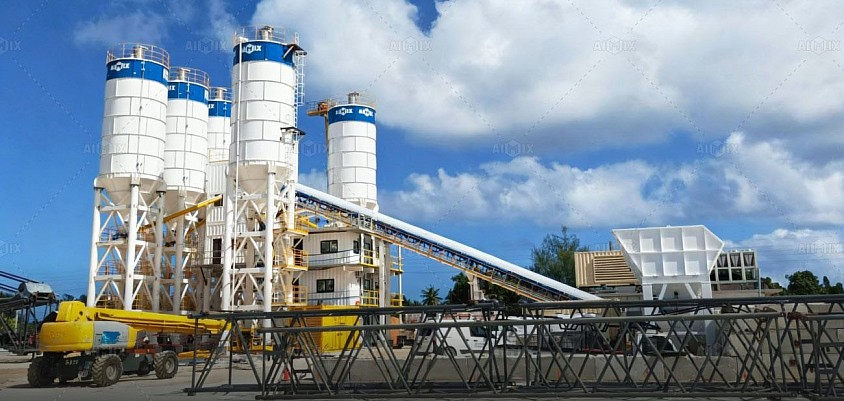
Innovations Driving Growth in Concrete Batching Plants Manufacturers Industry
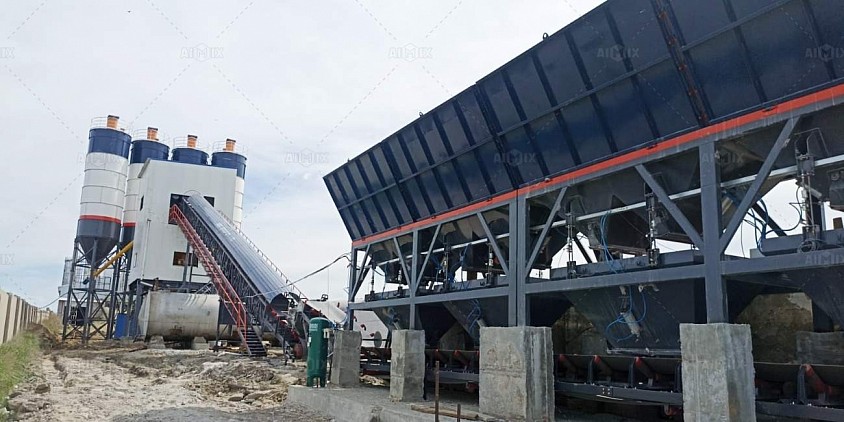
The global construction sector is undergoing rapid transformation, driven by infrastructure expansion, urbanization, and the increasing demand for high-quality concrete. At the center of this transformation are concrete batching plants manufacturers, who are continuously innovating to improve efficiency, sustainability, and automation in concrete production. These innovations are not only reshaping manufacturing standards but also influencing how contractors evaluate concrete batching plants for sale in today’s competitive market.
As construction projects become larger and more complex, manufacturers are focusing on smarter, faster, and more cost-effective batching solutions. This evolution is helping companies reduce operational costs, improve concrete quality, and meet stricter environmental regulations.
Smart Automation and Digital Control Systems
One of the most significant innovations in the industry is the integration of smart automation systems. Modern concrete batching plants manufacturers are increasingly adopting PLC (Programmable Logic Controller) systems, IoT sensors, and cloud-based monitoring tools to optimize plant performance.
These intelligent systems allow operators to control batching processes with high precision, ensuring accurate measurement of cement, aggregates, water, and additives. Automation reduces human error, improves consistency, and increases production efficiency.
For buyers exploring concrete batching plants for sale, automation has become a key decision factor. Fully automated systems offer real-time monitoring, remote diagnostics, and production data analysis, helping contractors make better operational decisions and reduce downtime.
Modular and Flexible Plant Designs
Another major innovation is the shift toward modular plant design. Instead of traditional fixed structures, manufacturers now offer modular systems that can be easily transported, assembled, and expanded.
This flexibility is especially valuable for contractors working on multiple or remote job sites. Modular plants allow faster installation and relocation, reducing setup time and logistics costs. As a result, demand for portable and modular concrete batching plants for sale has increased significantly in recent years.
For concrete batching plants manufacturers, modular design also improves scalability. Clients can start with a smaller plant and expand capacity later without replacing the entire system. This adaptability supports long-term investment efficiency and project growth.
Energy Efficiency and Sustainable Production
Sustainability has become a key focus area for the construction industry, and manufacturers are responding with energy-efficient technologies. Modern batching plants are designed to reduce power consumption, minimize waste, and optimize material usage.
Advanced mixing systems, energy-efficient motors, and optimized pneumatic components help reduce operational energy requirements. Some concrete batching plants manufacturers are also incorporating recycling systems that allow the reuse of leftover concrete and wastewater, significantly reducing environmental impact.
For contractors evaluating concrete batching plants for sale, sustainability features are becoming increasingly important due to stricter environmental regulations and rising energy costs. Plants that offer lower emissions and higher efficiency provide long-term economic and regulatory advantages.
Advanced Mixing Technology and Material Precision
Innovation in mixing technology is another key driver of industry growth. Modern twin-shaft mixers, planetary mixers, and continuous mixing systems have greatly improved concrete quality and production speed.
These systems ensure uniform mixing of materials, resulting in higher-strength and more durable concrete. Precision batching systems also ensure exact material ratios, which reduces waste and enhances structural performance.
Leading concrete batching plants manufacturers are focusing on improving mixer durability and wear resistance, especially for high-capacity plants operating in demanding environments. This ensures longer service life and reduced maintenance costs.
Integration of Artificial Intelligence and Data Analytics
Artificial intelligence (AI) and data analytics are increasingly being integrated into concrete production systems. AI-powered control systems can analyze production data, predict maintenance needs, and optimize batching sequences for maximum efficiency.
For example, predictive maintenance systems can detect early signs of wear or malfunction, helping operators avoid unexpected breakdowns. This reduces downtime and improves plant reliability.
When reviewing concrete batching plants for sale, buyers are now considering AI-driven systems as a long-term investment advantage. These smart technologies not only improve efficiency but also provide valuable insights into production performance and cost optimization.
Mobile and On-Site Production Solutions
The rise of mobile batching plants is another important innovation shaping the industry. Modern concrete batching plants manufacturers are developing compact, transportable systems that can be deployed directly at construction sites.
These mobile solutions eliminate the need for long-distance concrete transportation, reducing cost and improving quality control. On-site production ensures that concrete is used fresh, minimizing segregation and setting issues.
For contractors, mobile concrete batching plants for sale offer flexibility, especially for infrastructure projects such as roads, bridges, and remote construction sites. The ability to move equipment quickly between projects has become a major competitive advantage.
Improved Safety and Environmental Compliance
Safety and environmental protection are also driving innovation in batching plant design. Manufacturers are incorporating dust collection systems, noise reduction technology, and enclosed material handling systems to meet global environmental standards.
Automated safety controls reduce operator risk by minimizing manual intervention in critical processes. Emergency shutdown systems, overload protection, and real-time alarms enhance overall operational safety.
These improvements are particularly important for contractors operating in regions with strict environmental and safety regulations. As a result, demand for compliant concrete batching plants for sale continues to grow.
Conclusion
Innovation is the primary force driving growth in the concrete batching plants manufacturers industry. From smart automation and AI integration to modular design and sustainable production systems, manufacturers are redefining how concrete is produced and delivered.
For contractors exploring concrete batching plants for sale, these advancements offer significant benefits, including higher efficiency, lower operating costs, improved quality, and greater flexibility.
As global infrastructure demand continues to rise, manufacturers that prioritize innovation will remain at the forefront of the industry, shaping the future of concrete production and enabling more efficient, sustainable construction worldwide.
Sustainable Development Benefits of Mini Concrete Batching Plant for Sale Equipment
As the global construction industry continues to move toward greener, more efficient, and resource-conscious practices, the demand for compact and environmentally friendly equipment is growing rapidly. Among these solutions, the mini concrete batching plant for sale has become an increasingly popular choice for small and medium-sized contractors. Its compact design, lower energy consumption, and flexible operation make it an important tool in promoting sustainable construction practices.
Closely related to this trend is the growing adoption of the mini ready mix concrete plant, which enables on-site or near-site concrete production while significantly reducing environmental impact and operational costs. Together, these small-scale batching systems are reshaping how concrete is produced in urban, rural, and remote construction environments.
Reduced Carbon Emissions Through Localized Production
One of the most significant sustainability advantages of a mini concrete batching plant for sale is its ability to reduce transportation-related emissions. In traditional construction models, concrete is produced at a centralized plant and transported to job sites using mixer trucks. This process consumes large amounts of fuel and contributes to CO₂ emissions, especially when sites are located far from production facilities.
A mini batching plant allows contractors to produce concrete directly at or near the construction site. This localized production model significantly reduces the distance that raw materials and finished concrete need to travel. As a result, fuel consumption decreases, traffic congestion is reduced, and overall carbon emissions are lowered.
For small-scale infrastructure projects, residential developments, and rural construction, the mini ready mix concrete plant offers a practical and environmentally responsible alternative to conventional supply chains.
Energy Efficiency and Optimized Resource Use
Modern mini batching plants are designed with energy-saving features that help reduce electricity and fuel consumption. Compact motors, efficient mixing systems, and optimized control panels ensure that the plant operates with minimal energy waste while maintaining high production efficiency.
In addition, automation plays an important role in improving sustainability. With precise control systems, the mini concrete batching plant for sale can accurately measure raw materials such as cement, aggregates, water, and additives. This reduces overuse of materials and ensures that every batch meets the required specifications without unnecessary waste.
For contractors using a mini ready mix concrete plant, this level of precision not only improves environmental performance but also reduces production costs, making it a cost-effective solution for long-term operations.
Minimizing Material Waste and Improving Efficiency
Material waste is a major issue in traditional concrete production. Inaccurate manual batching or inefficient transport systems often lead to rejected batches, overproduction, or inconsistent concrete quality. These inefficiencies increase both environmental impact and project costs.
A mini concrete batching plant for sale helps address this problem through automated weighing and controlled mixing processes. Each ingredient is measured precisely according to the designed mix ratio, ensuring consistent output quality.
This accuracy reduces cement waste, which is particularly important because cement production is one of the largest contributors to industrial carbon emissions globally. By minimizing unnecessary cement usage, mini batching plants contribute directly to lowering the environmental footprint of construction projects.
The mini ready mix concrete plant further enhances this advantage by enabling on-demand production, which prevents overproduction and eliminates the need for large-scale storage or disposal of excess concrete.
Water Conservation and Environmental Protection
Water usage is another critical factor in sustainable construction. Traditional concrete production systems often consume large volumes of water for mixing, cleaning, and dust control, sometimes without efficient recycling mechanisms.
Modern mini batching plants increasingly incorporate water-saving technologies, such as recycling systems and automated water dosing controls. These systems ensure that water is used efficiently and only in required quantities.
For projects in water-scarce regions, the mini concrete batching plant for sale provides a more sustainable solution by reducing unnecessary water consumption and promoting reuse where possible.
Additionally, dust suppression systems integrated into these plants help minimize airborne particles during material handling, improving air quality at construction sites and reducing environmental pollution.
Flexibility Supporting Green Construction Projects
Flexibility is one of the key strengths of mini batching systems. The compact size and modular design of a mini ready mix concrete plant allow it to be quickly installed, relocated, and adapted to different construction environments.
This reduces the need for permanent infrastructure and minimizes land disturbance, which is especially beneficial for environmentally sensitive areas. Contractors working on residential developments, small road projects, or rural infrastructure can easily move the plant as the project progresses, reducing unnecessary environmental impact.
The mini concrete batching plant for sale is also ideal for short-term projects, where large stationary plants would be inefficient or economically unfeasible. This adaptability supports more sustainable construction planning and resource allocation.
Supporting Sustainable Urban and Rural Development
In rapidly developing regions, particularly in small cities and rural areas, access to large-scale concrete supply infrastructure may be limited. The mini ready mix concrete plant provides an efficient solution by enabling local production of concrete without relying on long-distance transport.
This localized production supports sustainable urbanization by reducing infrastructure pressure, lowering transportation costs, and improving project efficiency. It also helps rural development projects maintain consistent construction quality while minimizing environmental disruption.
As governments increasingly focus on sustainable infrastructure development, mini batching plants are becoming an essential part of modern construction ecosystems.
Long-Term Environmental and Economic Benefits
While the initial investment in a mini concrete batching plant for sale may vary depending on configuration and capacity, its long-term benefits are significant. Reduced fuel consumption, lower material waste, and improved production efficiency all contribute to long-term cost savings.
At the same time, compliance with environmental regulations becomes easier, helping contractors avoid penalties and meet sustainability standards required for public and private projects.
For businesses investing in a mini ready mix concrete plant, the combination of environmental responsibility and economic efficiency creates a strong competitive advantage in the construction market.
Conclusion
The mini concrete batching plant for sale represents a key advancement in sustainable construction technology. Through reduced emissions, efficient energy use, precise material control, and flexible deployment, it offers a practical solution for environmentally conscious construction.
The mini ready mix concrete plant further enhances these benefits by enabling localized, on-demand production that minimizes waste and improves efficiency.
As the construction industry continues to prioritize sustainability, compact batching systems will play an increasingly important role in supporting greener, more efficient, and more adaptable building practices worldwide.
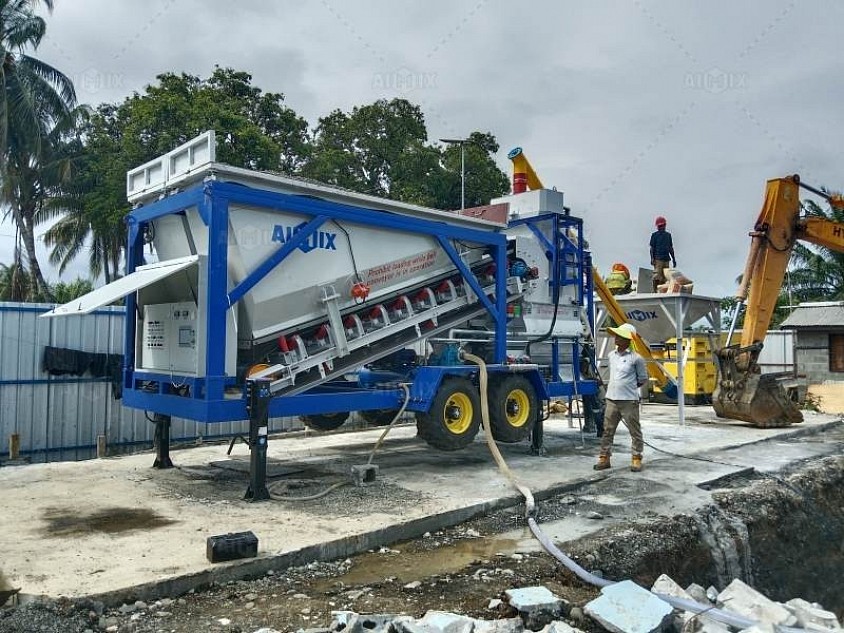
Understanding the Cost of Concrete Batching Plant through Wide Production Management Views
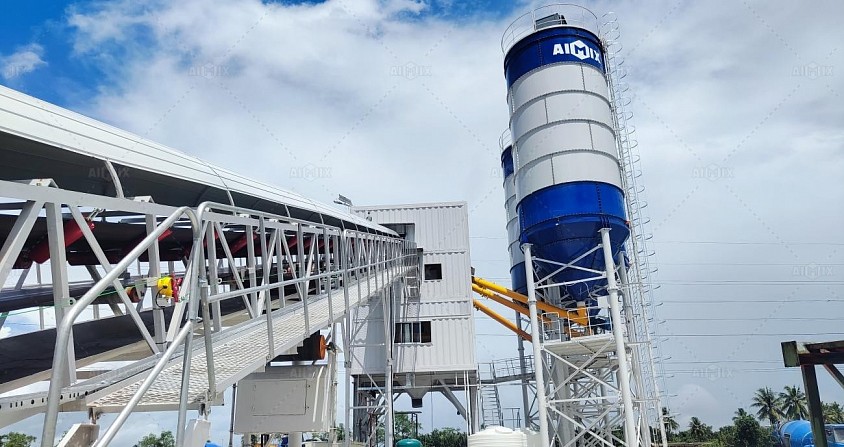
The cost of concrete batching plant investment is no longer viewed only as the price of equipment itself. In today’s construction industry, batching plant costs are closely connected to production management, operational efficiency, raw material control, labor allocation, energy consumption, and long-term business stability. As market competition gradually shifts from simple capacity expansion toward quality-oriented production, understanding batching plant costs from wider production management perspectives becomes increasingly important.
For investors and contractors, evaluating the total cost of a concrete batching plant requires looking beyond initial purchasing expenses. The real economic value of a plant is reflected in how effectively it supports stable production, reduces operational risks, and improves long-term profitability.
Initial Equipment Investment and Production Requirements
The first component affecting the cost of concrete batching plant projects is equipment configuration. Plant capacity, automation level, mixing technology, and storage systems all directly influence investment size.
Small batching plants designed for local construction projects usually require lower investment and simpler configurations. Medium and large stationary batching plants used for infrastructure or commercial concrete production involve higher equipment costs because they require larger mixers, aggregate batching systems, cement silos, conveyors, and advanced control systems.
Automation also plays a major role in cost differences. Manual or semi-automatic plants generally have lower purchase costs but higher labor dependency. Fully automatic batching plants increase initial investment but improve production accuracy, reduce material waste, and lower long-term operational expenses.
From a production management perspective, choosing equipment should depend on actual project demand rather than simply pursuing maximum capacity. Oversized equipment may increase idle costs, while insufficient capacity can reduce operational efficiency and delivery stability.
Site Selection and Infrastructure Costs
Another important factor influencing the cost of concrete batching plant operations is site preparation and infrastructure development.
Land costs vary significantly depending on location, transportation access, and proximity to construction markets. A plant located close to major infrastructure projects or urban construction zones may reduce transportation costs and improve delivery efficiency, although land prices may be higher.
Infrastructure expenses often include:
Foundation construction
Water supply systems
Electrical installations
Drainage systems
Material storage areas
Environmental protection facilities
Office and maintenance buildings
These supporting systems are essential for maintaining stable plant operations. In many regions, environmental compliance requirements are becoming stricter, increasing investment in dust collection systems, wastewater recycling equipment, and noise reduction technologies.
Operational Efficiency and Production Management
From wide production management views, operational efficiency has become one of the most critical factors affecting batching plant economics.
A batching plant with poor material management, unstable scheduling, or inefficient maintenance systems may experience frequent downtime, inconsistent concrete quality, and increased production waste. These problems can significantly raise long-term operating costs.
Modern batching plants increasingly rely on intelligent control systems to improve management efficiency. Automated weighing systems, moisture monitoring, and digital production tracking help operators maintain consistent concrete quality while reducing raw material losses.
Efficient production management can lower costs through:
Reduced cement waste
Accurate aggregate proportioning
Lower fuel and electricity consumption
Reduced labor intensity
Improved delivery coordination
Faster production cycles
In highly competitive markets, operational stability often becomes more valuable than simply increasing production volume.
Raw Material Management and Cost Stability
Raw materials account for a large portion of total concrete production costs. Cement, aggregates, fly ash, water, and admixtures all directly influence batching plant profitability.
Production management systems play an important role in maintaining material stability. Variations in aggregate moisture or inconsistent cement supply can affect concrete quality and increase production adjustments.
Many modern plants use digital monitoring technologies to track inventory levels and material consumption in real time. This allows operators to optimize procurement schedules and reduce storage risks.
Long-term cost control increasingly depends on how effectively a batching plant manages material fluctuations and maintains stable concrete performance under changing supply conditions.
Energy Consumption and Sustainability Pressures
Energy costs are becoming a more important consideration in batching plant operations. Mixers, conveyors, compressors, and material handling systems consume large amounts of electricity and fuel during continuous production.
As environmental regulations continue to tighten, many companies are investing in energy-efficient equipment and low-emission production systems. Although these upgrades may increase initial investment, they can reduce long-term operational expenses and improve environmental compliance.
Sustainable production practices are also influencing plant management strategies. Recycling wastewater, reducing dust emissions, and improving aggregate utilization are becoming common goals in modern batching plant operations.
From broader industry perspectives, sustainability is gradually shifting from an optional improvement to a core competitive factor.
How Do You Start a Concrete Batching Plant?
Many investors entering the concrete industry ask: how do you start a concrete batching plant?
The process usually begins with market research and production planning. Investors must evaluate local construction demand, infrastructure development trends, transportation conditions, and raw material availability before selecting plant capacity and configuration.
The general steps include:
Conducting market analysis and project feasibility studies
Selecting a suitable plant location
Choosing appropriate batching plant equipment
Obtaining environmental and operational permits
Building foundations and infrastructure systems
Installing and commissioning equipment
Recruiting operators and maintenance personnel
Establishing raw material supply chains
Implementing production management systems
Starting trial production and quality testing
Successful batching plant operations depend not only on equipment quality but also on management capability. Production scheduling, maintenance planning, quality control, and logistics coordination all influence long-term profitability.
Conclusion
Understanding the cost of concrete batching plant investment through wide production management views provides a more realistic perspective on industry competitiveness. Today, batching plant costs are shaped not only by equipment prices but also by operational efficiency, quality stability, environmental compliance, and long-term management capability.
As the concrete industry continues evolving toward intelligent and sustainable production, companies that focus on efficient management systems and stable operational performance are more likely to achieve long-term success. In this environment, the true value of a batching plant is increasingly measured by its ability to support reliable, efficient, and controlled concrete production over time.
Mini Concrete Batching Plant for Sale: Smart Investment for Emerging Construction Businesses and Contractors
A mini concrete batching plant for sale has become an increasingly popular choice for emerging construction businesses and small-to-medium contractors who need reliable concrete production without the high investment and operational complexity of large-scale systems. With growing infrastructure development in developing regions, especially in Southeast Asia, the demand for compact and efficient solutions such as a mini batching plant Indonesia continues to rise. These plants offer the right balance between affordability, mobility, and production efficiency, making them a strategic entry point into the concrete production industry.
What Is a Mini Concrete Batching Plant?
A mini concrete batching plant for sale is a compact version of a traditional concrete batching system designed for small-scale production. It typically includes essential components such as aggregate storage bins, a weighing system, a mixer unit, cement silos (optional or smaller capacity), and a control system. Despite its smaller footprint, it can still deliver consistent and high-quality concrete for various construction applications.
Compared to larger stationary plants, mini batching systems require less land, lower installation costs, and simpler operation. This makes them ideal for contractors who are just starting their business or working on projects with limited space and budget.
In many cases, a mini plant can be installed and operational within a short period, allowing contractors to quickly begin production and reduce dependency on external concrete suppliers.
Why Mini Batching Plants Are a Smart Investment
One of the key advantages of investing in a mini concrete batching plant is its low entry cost. For emerging construction companies, capital investment is often a major barrier. A mini plant reduces this burden while still enabling in-house concrete production, which improves profit margins over time.
Another important benefit is operational flexibility. Mini plants are often designed with modular or semi-mobile structures, allowing contractors to relocate or adjust the system as project needs change. This is particularly valuable in developing markets like Indonesia, where construction sites may vary widely in location and scale.
Additionally, mini batching plants offer energy-efficient operation and lower maintenance requirements. With fewer complex components compared to large plants, the risk of breakdown is reduced, ensuring smoother daily operations and fewer delays.
Growing Demand for Mini Batching Plant Indonesia Market
The demand for mini batching plant Indonesia solutions has been growing rapidly due to the country’s expanding infrastructure, housing development, and road construction projects. Many contractors in Indonesia operate in rural or island-based regions where transporting ready-mix concrete from centralized plants is expensive and inefficient.
Mini batching plants provide a practical solution by enabling on-site or near-site concrete production. This reduces transportation costs, improves concrete quality control, and ensures timely supply for construction activities.
In addition, Indonesia’s growing number of small and medium construction firms has created a strong market for affordable equipment. Mini batching plants are especially attractive because they align with the budget constraints and operational scale of local contractors while still meeting project requirements.
Application Scenarios of Mini Concrete Batching Plants
Mini concrete batching plants are widely used in residential construction projects, such as housing developments, villas, and small commercial buildings. Their compact size allows them to fit into tight construction sites where space is limited.
They are also commonly used in rural infrastructure projects, including village roads, small bridges, irrigation systems, and public facilities. In these environments, transporting ready-mix concrete from distant plants is often impractical, making on-site production essential.
In addition, mini plants are suitable for startup contractors who want to enter the concrete supply business. By offering small-scale ready-mix production, these businesses can gradually expand their customer base without heavy initial investment.
Key Features and Operational Benefits
Modern mini concrete batching plants are equipped with automated control systems that simplify operation and improve accuracy. Operators can manage batching ratios, mixing time, and production output through a centralized control panel, reducing human error and improving consistency.
Another key feature is modular design. Many mini plants are designed to be easily assembled and disassembled, making transportation and installation more efficient. This is especially useful for contractors working across multiple project sites.
Furthermore, mini batching plants are often designed with durable components that can withstand continuous operation in harsh construction environments. This ensures long-term reliability and reduces maintenance costs, contributing to better return on investment.
Conclusion: A Practical Choice for Long-Term Growth
A mini concrete batching plant for sale is more than just a small-scale equipment option—it is a strategic investment for emerging construction businesses aiming to improve efficiency and profitability. With its low cost, easy operation, and flexible deployment, it provides an ideal entry point into independent concrete production.
For contractors in growing markets such as Indonesia, the mini batching plant Indonesia solution offers even greater value by addressing local construction challenges, reducing logistics costs, and supporting decentralized project development. As infrastructure demand continues to rise, mini batching plants will remain a key tool for sustainable growth in the construction industry.
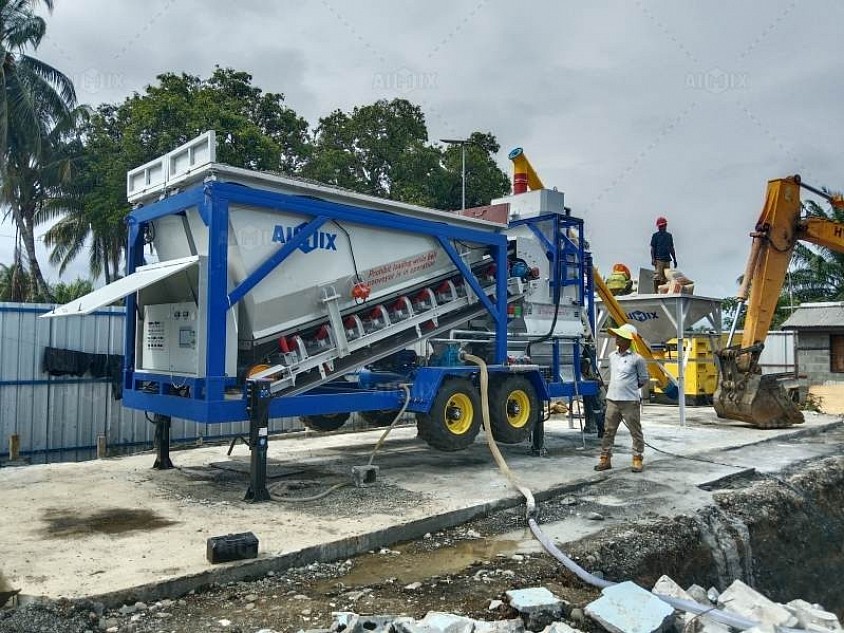
Mobile Concrete Batching Plant Price Analysis for Contractors Entering the Concrete Supply Industry
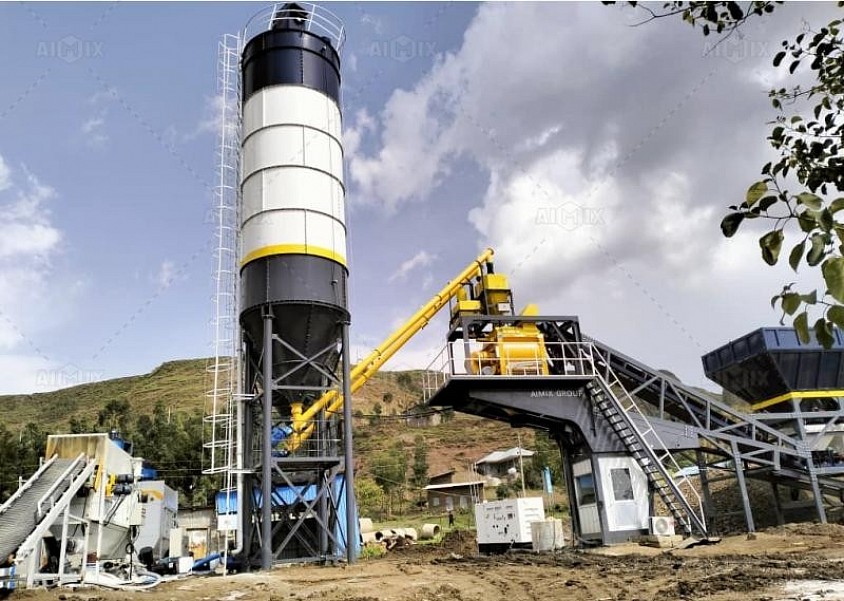
As global infrastructure development and urban construction continue expanding, more contractors are entering the ready mix concrete supply industry to improve profitability and secure stable material supply for their projects. Among various equipment options, mobile batching plants have become increasingly popular because they combine production flexibility, convenient transportation, and relatively lower installation requirements. However, before investors buy concrete batching plant equipment, understanding the factors influencing mobile concrete batching plant price is extremely important for making cost-effective business decisions.
The total investment cost of a mobile batching plant is not limited to the equipment purchase price alone. Production capacity, plant configuration, transportation expenses, automation level, and long-term operational efficiency all directly affect the overall financial return. Contractors entering the concrete supply market must carefully evaluate both initial investment and future operating costs before selecting suitable equipment.
Why Mobile Batching Plants Are Popular Among New Contractors
Compared with stationary batching plants, mobile concrete batching plants offer greater flexibility for contractors working across multiple construction sites. Their compact structure and modular design allow easier transportation, faster installation, and convenient relocation between projects.
For contractors entering the concrete supply industry for the first time, mobility provides important advantages. Instead of investing heavily in permanent infrastructure, businesses can move the plant according to project demand, reducing idle equipment risks and improving asset utilization.
Mobile batching plants are especially suitable for highway construction, bridge projects, mining operations, rural infrastructure development, and temporary commercial concrete supply operations. In these situations, fast project deployment can significantly improve construction efficiency and reduce transportation costs associated with long-distance concrete delivery.
Another reason many investors buy concrete batching plant systems in mobile configurations is the reduced foundation requirement. Mobile plants generally need less civil engineering work, which lowers installation costs and shortens project preparation time.
Main Factors Affecting Mobile Concrete Batching Plant Price
One of the most important factors influencing mobile concrete batching plant price is production capacity. Small-capacity plants designed for rural or temporary projects are usually much cheaper than large commercial plants capable of producing high volumes of concrete continuously.
For example, mobile plants with capacities between 25 and 50 cubic meters per hour are commonly selected by small contractors because they require lower investment and simpler operation. Larger models designed for commercial ready mix production may include advanced control systems, larger aggregate storage, and high-performance mixers, which increase overall equipment cost.
Mixer type also significantly affects price. Twin-shaft mixers generally provide better mixing efficiency and concrete quality but are more expensive than drum mixers. Contractors focused on commercial concrete production often prefer twin-shaft systems because of their superior performance during continuous operation.
Automation level is another major pricing factor. Plants equipped with fully automatic control systems, moisture sensors, intelligent weighing systems, and remote monitoring technologies typically cost more initially. However, these technologies improve batching accuracy, reduce labor dependence, and increase long-term operational efficiency.
In addition, raw material feeding systems influence overall plant cost. Belt conveyor systems usually provide higher production efficiency but require larger structures and higher investment. Hopper feeding systems are more compact and economical for smaller projects.
Transportation and Installation Cost Considerations
When evaluating mobile concrete batching plant price, contractors must also consider transportation and installation expenses. Although mobile plants are easier to relocate than stationary plants, equipment dimensions and shipping distance still influence total project cost.
Export projects may involve ocean freight charges, customs duties, local transportation, and installation support expenses. Contractors operating in remote regions should pay special attention to transportation planning because difficult road conditions can increase delivery costs significantly.
One advantage of mobile batching plants is that installation time is much shorter compared with stationary plants. Many mobile systems are pre-assembled before delivery, allowing faster commissioning after arrival on site. This helps contractors reduce labor expenses and start concrete production more quickly.
For companies planning to operate across multiple project locations, lower relocation costs become an important economic advantage over traditional stationary batching plants.
Operational Costs and Long-Term Profitability
Many first-time investors focus mainly on purchase price when they buy concrete batching plant equipment, but long-term operational costs are equally important. Fuel consumption, electricity usage, spare parts replacement, labor requirements, and maintenance expenses all influence the real profitability of a concrete production business.
Mobile batching plants with energy-efficient motors and optimized mixing systems can reduce fuel and power consumption during long operating periods. Intelligent control technologies also help minimize material waste by improving batching accuracy and reducing overproduction.
Maintenance cost depends heavily on equipment quality and operating conditions. High-quality components may increase initial investment slightly, but they often reduce long-term repair frequency and extend equipment lifespan. Reliable after-sales service and spare parts availability are also critical for minimizing downtime.
For contractors serving multiple construction projects simultaneously, operational flexibility provided by mobile plants can improve business profitability significantly. The ability to relocate quickly allows companies to follow market demand and maintain higher equipment utilization rates.
Choosing the Right Plant for Business Expansion
Selecting the right mobile batching plant requires balancing budget limitations with future production goals. Contractors entering the concrete supply industry should avoid choosing equipment based only on the lowest purchase price.
Small-capacity plants may reduce initial financial pressure, but limited production capability could restrict future business expansion. On the other hand, oversized equipment may create unnecessary investment burdens if local concrete demand is still limited.
Market demand analysis is therefore extremely important before purchasing equipment. Contractors should evaluate project volume, transportation distance, raw material supply conditions, labor availability, and expected business growth before making investment decisions.
Many manufacturers now offer customized mobile batching plant solutions designed for different regional markets and construction environments. Flexible configurations allow contractors to choose suitable production capacity, mixer type, automation level, and feeding systems according to their operational needs.
Future Trends in Mobile Concrete Batching Plant Investment
As construction industries continue moving toward automation and flexible project management, demand for mobile batching plants is expected to increase further. Intelligent control technologies, remote monitoring systems, and energy-saving designs are becoming standard features in modern equipment.
Environmental regulations are also influencing plant design. Dust collection systems, noise reduction technologies, and fuel-efficient power systems are increasingly important for contractors operating in urban or environmentally sensitive areas.
For new investors, mobile batching plants provide an attractive entry point into the concrete supply industry because they combine lower infrastructure requirements with strong operational flexibility. However, successful investment depends on understanding both initial equipment cost and long-term business value.
Careful price analysis helps contractors select equipment that not only fits their budget but also supports future business growth, stable concrete quality, and sustainable operational profitability.
Concrete Batching Plant for Sale in Energy Saving and Environmental Protection Technologies
In today’s construction industry, sustainability and efficiency have become key priorities for contractors, developers, and material suppliers. As infrastructure projects continue to expand globally, the demand for environmentally friendly and energy-efficient equipment is increasing rapidly. A concrete batching plant for sale is no longer evaluated only by production capacity or price, but also by its ability to reduce energy consumption, control emissions, and support green construction practices. At the same time, leading concrete batching plants manufacturers are continuously upgrading their technologies to meet stricter environmental standards and improve operational efficiency.
Modern batching plants are designed to balance high productivity with environmental responsibility. This includes reducing dust emissions, lowering energy usage, minimizing material waste, and optimizing water recycling systems. These improvements not only support sustainable construction goals but also help companies reduce long-term operating costs.
Energy-Saving Design in Modern Concrete Batching Plants
One of the most important trends in the development of concrete batching plants is energy efficiency. Traditional batching systems often consume large amounts of electricity due to inefficient motors, outdated control systems, and continuous high-load operation. In contrast, modern plants are equipped with energy-saving technologies that significantly reduce power consumption.
For example, high-efficiency motors and frequency conversion systems are now widely used in mixers, conveyors, and air compressors. These systems adjust energy output based on actual production demand, avoiding unnecessary power usage during low-load operation. This intelligent energy control helps reduce electricity costs while maintaining stable production performance.
In addition, advanced batching control systems allow operators to optimize production cycles. By improving batching accuracy and reducing waiting time between processes, energy waste is minimized. This is especially important for large-scale ready-mix operations where continuous production is required.
Environmental Protection Technologies in Batching Plants
Environmental protection is another critical focus in modern concrete production. A high-quality concrete batching plant for sale is expected to meet strict environmental standards, especially in urban construction areas and regions with strong environmental regulations.
Dust control systems are one of the most important environmental features. Cement silos, conveyor transfer points, and mixing areas are often equipped with dust collectors and sealed structures to prevent airborne particles from spreading. This helps reduce pollution and improve working conditions on construction sites.
Water recycling systems are also widely used in modern batching plants. Wastewater generated during mixing and cleaning processes can be collected, filtered, and reused in production. This not only reduces water consumption but also prevents wastewater from being discharged into the environment.
Noise reduction technology is another important aspect. Soundproof covers, vibration isolation systems, and low-noise equipment design help minimize noise pollution, making batching plants more suitable for urban and residential areas.
Role of Concrete Batching Plants Manufacturers in Green Development
The advancement of environmental and energy-saving technologies is closely linked to innovation by concrete batching plants manufacturers. Leading manufacturers are continuously investing in research and development to improve plant efficiency and reduce environmental impact.
Many manufacturers are now focusing on modular plant design, which allows equipment to be transported, installed, and upgraded more easily. This reduces construction waste and improves resource utilization efficiency. Modular systems also allow users to expand production capacity without replacing the entire plant, making them more sustainable in the long term.
Manufacturers are also integrating smart control technologies into batching plants. Digital monitoring systems can track energy usage, material consumption, and production efficiency in real time. This data helps operators optimize production processes and identify areas where energy savings can be achieved.
In addition, environmental certification and compliance with international standards have become important factors in plant design. Many manufacturers now ensure that their equipment meets ISO environmental standards and local emission regulations, making their plants suitable for global markets.
Energy Efficiency and Cost Reduction Benefits
Energy-saving batching plants provide significant long-term economic benefits. While the initial investment in advanced equipment may be slightly higher, reduced energy consumption and lower maintenance costs can lead to substantial savings over time.
For example, optimized mixing systems reduce unnecessary running time, which directly lowers electricity usage. Efficient material handling systems also minimize waste, ensuring that raw materials such as cement, sand, and aggregates are used more effectively.
In large-scale production environments, even small improvements in energy efficiency can result in significant cost reductions. This makes energy-efficient batching plants a practical choice for commercial ready-mix concrete suppliers and infrastructure contractors.
Environmental Compliance and Industry Requirements
As environmental regulations become stricter worldwide, construction companies are under increasing pressure to adopt greener production methods. A modern concrete batching plant for sale must comply with local environmental laws related to dust emissions, wastewater discharge, and energy consumption.
Failure to meet these requirements can lead to project delays, fines, or restrictions on construction activity. Therefore, investing in environmentally compliant equipment is not only a technical decision but also a strategic business choice.
In many regions, governments also encourage the use of energy-efficient construction equipment through incentives and policy support. This further increases the demand for advanced batching plants that integrate environmental protection technologies.
Future Trends in Sustainable Concrete Production
The future of concrete batching technology is strongly linked to sustainability and digital transformation. Equipment manufacturers are increasingly focusing on intelligent systems that combine automation, data analytics, and environmental monitoring.
Artificial intelligence and IoT-based systems are being introduced to optimize production efficiency and reduce resource consumption. These technologies allow batching plants to automatically adjust operating parameters based on real-time conditions, improving both energy efficiency and output quality.
At the same time, the industry is moving toward low-carbon concrete production. This includes the use of recycled materials, alternative cementitious materials, and energy-efficient production methods. Batching plants are being adapted to support these new materials while maintaining consistent performance.
Conclusion
A modern concrete batching plant for sale is no longer just a production facility—it is an integrated system designed for energy efficiency, environmental protection, and long-term operational sustainability. With increasing global demand for green construction practices, energy-saving technologies and environmental protection systems have become essential features of modern batching plants.
At the same time, leading concrete batching plants manufacturers play a key role in driving innovation by developing smarter, cleaner, and more efficient equipment. Their continuous improvements in automation, modular design, and environmental compliance are shaping the future of concrete production.
For construction companies and investors, choosing an energy-efficient batching plant is not only a way to reduce operating costs but also a strategic step toward sustainable and responsible development in the modern construction industry.